
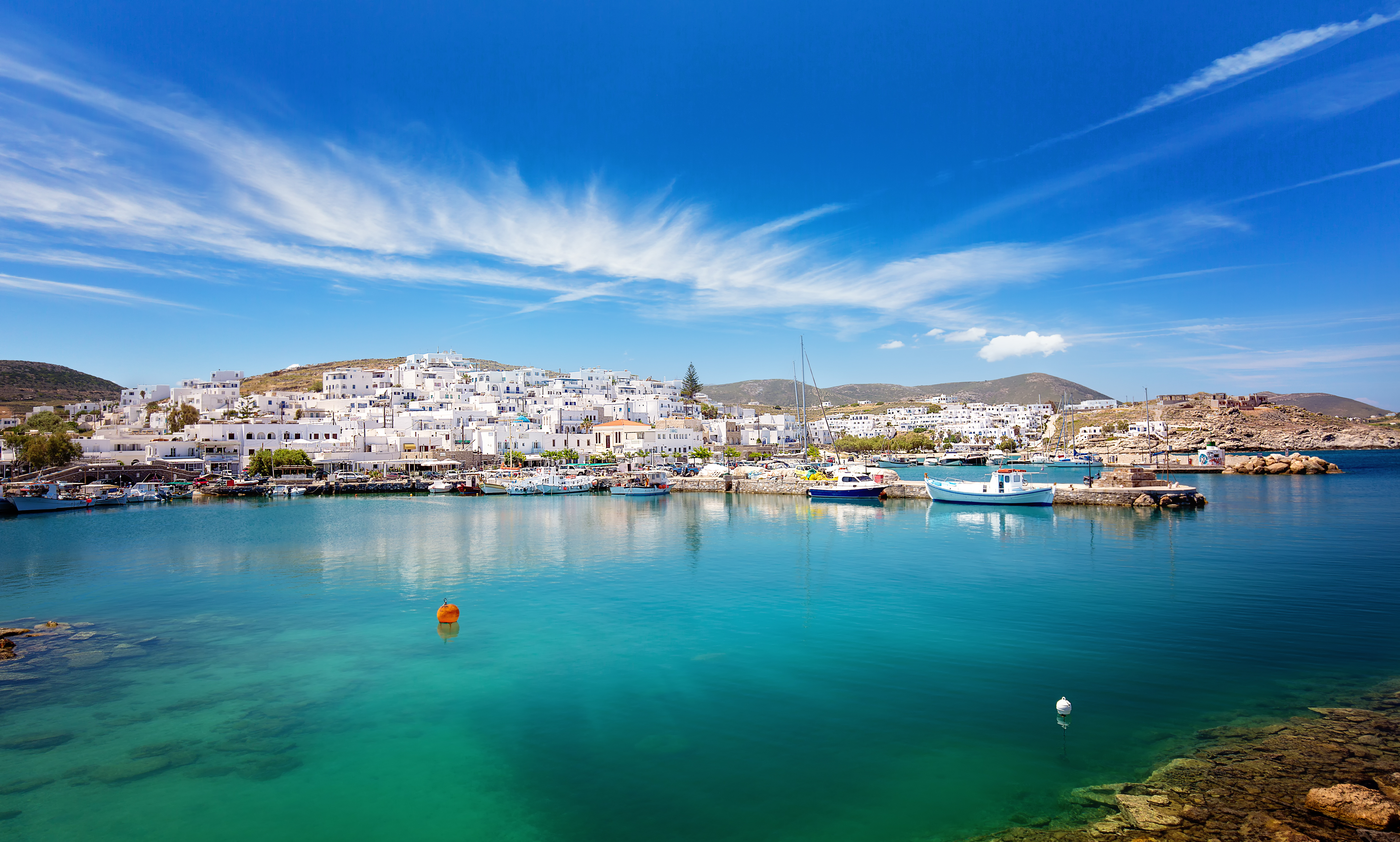
IMaRC member Dr. Associate Professor Nakada to open New Collaborations & strengthen links beween Japan and Namibia
Dr. Tatsuya Nakada is a wellknown international law specialist, who has
a track record of working for the government office in Japan and with
extensive international experience.
Last week, he was invited to go and meet with the president of the national
university UNAM in Namibia, who happened to have also visited Kobe
University this year, in order to strengthen bonds between Japan and
Namibia, and between Kobe University and UNAM around common research themes
related to international maritime laws and policies, and especially the
problems of ship wrecks, of which Dr. Nakada is a specialist.
According to both parties, we can expect the two universities to continue
and accelerate their relations on both education and research.
PDF(16.7MB)


New Paper Published by the team of Professor Gomez on AI and hazards:Debris flow susceptibility mapping using neural networks and deep learning with SHAP-based interpretation (Published in Earth Science Informatics,JCRQ1, IF 4.2)
Yousefi, S., Mardanian, S., Imaizumi, F., Gomez, C. Debris flow susceptibility mapping using neural networks and deep learning with SHAP-based interpretation in Chaharmahal and Bakhtiari Province, a semi-arid mountainous region of Iran. Earth Sci Inform 19, 127 (2026).
https://link.springer.com/article/10.1007/s12145-026-02179-7
Abstract: This study evaluates four models across two modeling paradigms to develop debris flow susceptibility maps for Chaharmahal and Bakhtiari Province, Iran, a semi-arid, mountainous region spanning 1,655,300 ha prone to debris flow hazards. The models include Multi-Layer Perceptron (MLP) and Self-Organizing Map (SOM) (Neural Networks, NN) and Convolutional Neural Network (CNN) and Long Short-Term Memory (LSTM) (Deep Learning, DL). A
debris flow inventory of 713 points (288 debris flow, 425 non-debris flow) was compiled, and collinearity analysis on 25 environmental variables reduced to 19 variables (e.g., flow accumulation, slope degree, rainfall) after excluding highly correlated factors (e.g., topographic roughness index, average rainfall). Models were trained on 465 points and validated on 248 points, with susceptibility maps delineated into five zones (Very Low, Low, Moderate, High, Very High) using the natural break algorithm.
Results show MLP and CNN emerged as the most accurate supervised models, achieving AUC values of 0.91 and 0.90, respectively, with RMSE values of 0.35 and 0.35, indicating high discriminative ability and low prediction error. LSTM achieved moderate performance (AUC: 0.86), while SOM, employed as an unsupervised clustering method for exploratory analysis, showed limited predictive capability (AUC: 0.70). For MLP, susceptibility zones were distributed as Very Low (81.4%), Low (6.4%), Moderate (2.1%), High (2.2%), and Very High (7.9%). CNN allocated 68.6% to Very Low, 16.4% to Low, 6.2% to Moderate, 4.3% to High, and 4.5% to Very High. The SHAP analysis underscored topographic wetness index (0.11), surface sand content (0.07), slope length (0.06), flow accumulation (0.06), and depth to bedrock (0.05) as primary predictors, illustrating the significant roles of hydrological, topographic, and soil-related factors in driving debris flow events.
(日本語)
イランのチャハールマハール・バフティヤーリー州(面積165万5,300ヘクタール、土石流災害の発生しやすい半乾燥・山岳地域)を対象に、2つのモデリングパラダイムにまたがる4種類のモデルを用いて土石流危険度マップを作成し、その性能を評価した。使用したモデルは、多層パーセプトロン(MLP)および自己組織化マップ(SOM)(ニューラルネットワーク、NN)、畳み込みニューラルネットワーク(CNN)および長短期記憶(LSTM)(深層学習、DL)である。713地点(土石流発生地点288、非発生地点425)からなる土石流インベントリを作成し、25の環境変数に対して共線性分析を行い、相関の高い因子(地形粗度指数、平均降雨量など)を除外した結果、19変数(流量集中度、傾斜角、降雨量など)に絞り込んだ。モデルは465地点で学習し、248地点で検証を行い、危険度マップは自然分類(ナチュラルブレイク)アルゴリズムを用いて5段階(極めて低い、低い、中程度、高い、極めて高い)に区分した。
結果として、MLPおよびCNNが最も精度の高い教師あり学習モデルであることが示され、AUC値はそれぞれ0.91および0.90、RMSE値はいずれも0.35であり、高い判別能力と低い予測誤差を示した。LSTMは中程度の性能(AUC:0.86)を示した一方、探索的分析のための教師なしクラスタリング手法として用いたSOMは、限定的な予測能力(AUC:0.70)にとどまった。MLPによる危険度区分の割合は、極めて低い(81.4%)、低い(6.4%)、中程度(2.1%)、高い(2.2%)、極めて高い(7.9%)であった。CNNでは、極めて低いが68.6%、低いが16.4%、中程度が6.2%、高いが4.3%、極めて高いが4.5%を占めた。
SHAP分析の結果、地形湿潤指数(0.11)、表層砂含有率(0.07)、斜面長(0.06)、流量集中度(0.06)、基盤岩深度(0.05)が主要な予測因子として抽出され、水文学的・地形学的・土壌関連因子が土石流発生を左右する上で重要な役割を果たしていることが示された。
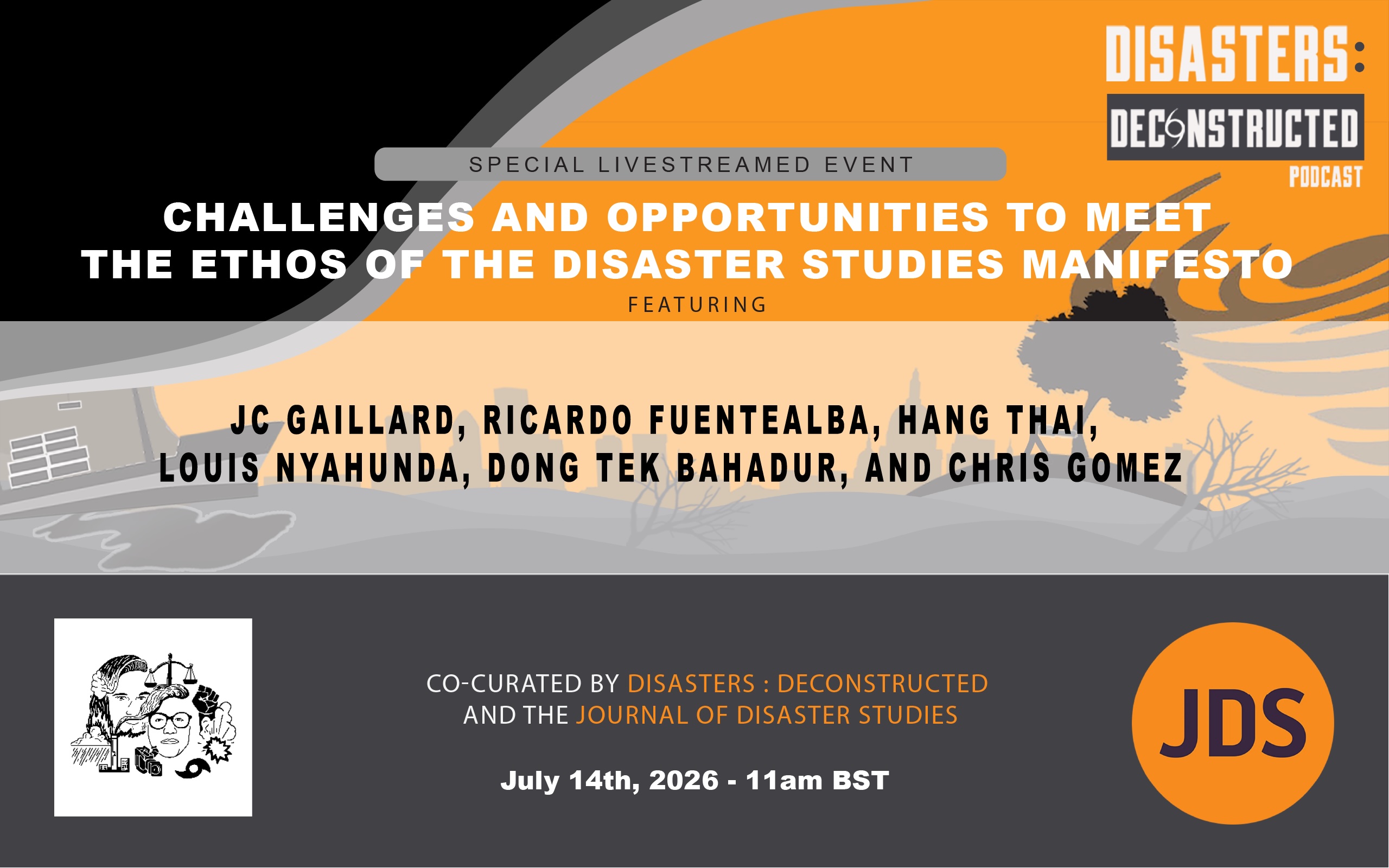
Challenges and Opportunities to meet the ethos of the disaster studies manisfesto
A team of academics from USA, New Zealand, South Africa, the Phillipines, the UK and Christopher Gomez representing Japan will be discussing the Manifesto they created 5 years ago for more ethical research in the field of disaster risk worldwide.
This transdisciplinary team has been bringing debates across social sciences, political sciences and philosophy, and those interested are more than welcome to listen to the live event on the 14th July from 7 PM Japan time (no registration needed, just tune in the Youtube live feed).
*https://www.youtube.com/@DisastersDeconstructed*
*INTRODUCTION TO GEOMORPHOLOGY - INTERNATIONAL COURSE WITH UMS*
As part of the effort of education internationalization at Kobe University and Universitas Muhammadiyah Surakarta, Dr. Aditya Saputra (Vice-Dean) and Professor Christopher Gomez are offering for the 5th consecutive year an educational program in Earth Surface Processes, and Geomorphology.
Participation is free for the students of Kobe University and Universitas Muhammadiyah Surakarta.
Sebagai bagian dari upaya internasionalisasi pendidikan di Universitas Kobe dan Universitas Muhammadiyah Surakarta, Dr. Aditya Saputra (Wakil Dekan) dan Profesor Christopher Gomez menawarkan untuk tahun kelima berturut-turut sebuah program pendidikan dalam bidang Proses Permukaan Bumi dan Geomorfologi.
Partisipasi gratis bagi mahasiswa Universitas Kobe dan Universitas Muhammadiyah Surakarta.
DATES:
Tuesday, 9 June 2026: 13.00-14.30 pm. Jakarta Time or 15.00-16.30 pm. Osaka Time
Monday, 15 June 2026: 13.00-14.30 am. Jakarta Time or 15.00-16.30 Pm. Osaka Time
Tuesday, 16 June 2026: 13.00-14.30 pm. Jakarta Time or 15.00-16.30 pm. Osaka Time
ONLINE CONNECTION:
*Topic: Geomorphology #**1**, Prof Gomez*
Time: Jun 9, 2026 01:00 PM Jakarta
Join Zoom Meeting
https://ums-ac-id.zoom.us/j/93337618462?pwd=Z8aV7D61lL4jEUueUwbmF84XslfoaH.1
Meeting chat link
https://ums-ac-id.zoom.us/launch/jc/93337618462
*Topic: Geomorphology #2, Prof Gomez*
Time: Jun 15, 2026 01:00 PM Jakarta
Join Zoom Meeting
https://ums-ac-id.zoom.us/j/94044093353?pwd=GhyWlOwW49l88RCkP0bvGMbpR8JN8c.1
Meeting chat link
https://ums-ac-id.zoom.us/launch/jc/94044093353
*Topic: Geomorphology #**3**, Prof Gomez*
Time: Jun 16, 2026 01:00 PM Jakarta
Join Zoom Meeting
https://ums-ac-id.zoom.us/j/91382554785?pwd=tIPTDUMY159qdLKCaO4GBPdwpNmq2D.1
Meeting chat link
https://ums-ac-id.zoom.us/launch/jc/91382554785
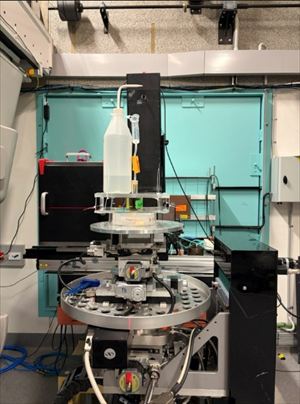
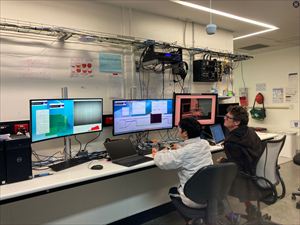
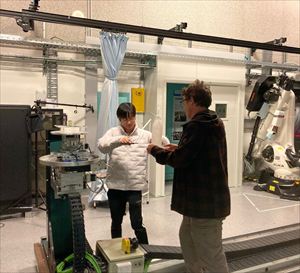
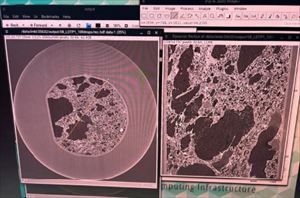
New Research on pumice porosity using CT-scan in collaboration with NewZealand and Australia and PhD student Sho Sawada.
Based on the original research by Gomez and Kataoka on pumices in lahars,one important question about whether gas remained trapped in pumices while travelling in lahars, or whether they were becoming fully wet has been elucidated for the first time by Sho Sawada, working in collaboration with Ben Kennedy at Canterbury University, where Professor Gomez used to work, and with Australia at the Synchrotron. Both Canterbury University and Australia's ANSTO provided funding and research space and instruments, without which the research would not have been possible.
In unpublished work yet, the experiments of Sho Sawada showed bubbles trapped in the water inside the pumice vesicle, for the first time. These results will greatly enhance our understanding of gas exchanges and behaviour during transport reatly enhance our understanding of gas exchanges and behaviour during transport.
研究ニュース・博士課程の澤田さんがニュージランドの大学とオーストラリアの研究所で火山軽石の新研究結果 - 災害・水文学・地形
A paper authored by Hayato Seiichi has been published in "Radiation Measurements."
A paper authored by Hayato Seiichi, who completed his Master’s degree this spring, has been published in the academic journal "Radiation Measurements." The study is titled "A new model for etch-pit evolution based on the wave equation and Huygens' principle." Solid-state nuclear track detectors are devices that visually enlarge the paths of radiation through chemical etching. This research marks the world's first successful dynamic description of their growth behavior. The paper is available via open access (DOI: 10.1016/j.radmeas.2026.107722). Professor Yamauchi, the last author, commented, "This is truly a new form of research, made possible by the unique insights of Professor Gomez from a different field, combined with the exceptional programming skills of Mr. Hayato."
PhD student Daikai-san at the Gomez laboratory published research in a top journal in Volcanology
AHis research shows that the dome of Unzen Volcano is still sliding 30 years after the eruption. For this purpose he used Ground-Based laser and radar interferometry, as well as drone-based and airplane-based photogrammetry and laser technologies. His research identifies the remaining hazards and disaster risk potential posed by the large dome hanging at the summit of the volcano.
Rikuto Daikai, Christopher Gomez, Norifumi Hotta, Yoshinori Shinohara, 2026. Long-term deformation and surface change of the Heisei-Shinzan lava dome revealed by integrated monitoring, Journal of Volcanology and Geothermal Research, 108643, doi.org/10.1016/j.jvolgeores.2026.108643.
International Transport Lab’s recent study, “Modeling and Optimizing the Global Hydrogen Supply Chain with STGNN,” was presented at the 72th JSCE Annual Meeting.
Master student Mr. Fumiya Nohara received the Best Paper Award at the 2025 International Association of Maritime Universities conference, held in Chennai from October 13 to 18. He was recognized for his paper titled “Promoting Sustainability through Hydrogen Infrastructure: Addressing Logistical Challenges and Energy Transition“.
International Transport Lab’s recent research projects resulted in a publication titled “Toward greener logistics: uncovering key enablers of the physical internet using AI-powered theme analysis” in Cleaner Logistics and Supply Chain. The study identified eight critical domains $2014 including smart infrastructure, energy systems, and cybersecurity $2014 mapped to SDGs 9, 11, and 13. The findings emphasize the need for interoperability, digital twins, renewable energy, and secure data to enable sustainable logistics transformation.
Massachusetts Maritime Academy International Experience at Kobe University
A group of eleven students and two faculty members from the International Maritime Business Course at Massachusetts Maritime Academy came to Kobe University’s Faculty of Ocean Science and Technology for a three-week intensive study abroad program from June 19th to July 9th, 2025. This program centers on student exchange activities between Kobe University and Massachusetts Maritime Academy (MMA), and was initiated in May, 2024. The program was designed to immerse the MMA students in a wide variety of educational, experiential learning, and cultural immersion activities aimed to enrich their world perspectives while also providing the host students with valuable cross cultural experiences. The MMA students received customized academic lectures on maritime topics provided by 14 different faculty members and visiting scholars, visited key local maritime industry sites including Osaka Container Terminal and the Port of Kobe, took a cruise on Kobe University’s training vessel Kaijin Maru, made cultural excursions to Kyoto and Himeji, and joined in a beach cleanup activity in Nishinomiya. The MMA students also participated in several general English and maritime English classes with Kobe University students and were able to partake in communicative activities, presentations, and discussions that were meaningful and memorable for both groups of students. The second year of this program was a great success, as indicated by the collection of highly favorable feedback data from both Kobe University and MMA students. Kobe University looks forward to welcoming back a new group of MMA students in 2026, and also to a reciprocal visit to MMA by Kobe University students in 2027.
International Maritime and Ocean Policy Science Research Department Seminar
The International Maritime and Ocean Policy Science Research Department is pleased to announce its 2025 Seminar, which will focus on issues related to international maritime and ocean policies associated with maritime transport, industry, research, education, and training. This department promotes research that contributes to maritime and ocean policies, such as building efficient, sustainable, and resilient supply chains through research on next-generation logistics networks based on data science, and ocean policies that are in line with national interests from the perspective of international law in the context of trends in marine living resources, marine non-living resources, and underwater cultural heritage. We also work to revitalize international collaborative research through scientific research on future international maritime education, such as collaboration with the International Maritime Organization (IMO) and the International Association of Maritime Universities (IAMU), and develop international exchange in comprehensive research. This year’s seminar will include four presentations that highlight some of the efforts being made to achieve these goals and place a spotlight on collaborative efforts of the department.
Theme:
International Maritime and Ocean Policy Science, Research, and Education
Program:
15:10 ~ 15:15 $2013 Opening and introductions delivered by Matthew Rooks
15:15 ~ 15:35 $2013 Social Media and Logistics: Uncovering Challenges and Solutions Through YouTube Data: Enna Hirata
15:35 ~ 15:55 $2013 What Is the Essence of the Deep Seabed Regime? In terms of International Law of the Sea: Tatsuya Nakada, Kobe University
15:55 ~ 16:15 $2013 Bridging the Gap $2014 Seafarers and Naval Architects Working Together for Ship Performance: Marko Katalinic, Split University
16:15 ~ 16:35 $2013 Cultivating Affective Competencies in Future Global Maritime Professionals through Study Away
Programs: Paul Szwed, Massachusetts Maritime Academy, Matthew Rooks, Kobe University
16:35 ~ 16:45 $2013 Q & A, Discussion, and closing remarks from Matthew Rooks
Mr. Hisatoshi Naganawa from International Transport Lab was awarded the Japan Logistics Society Young Researcher Award for his research on optimizing logistics hubs and routes in a Physical Internet environment.
Open seminar on “Hyperconnected City Logistics” by Prof. Russell Thompson from the University of Melbourne was held. In the seminar, Prof. Russell will present recent research projects on parcel lockers, last-mile delivery, crowdsourced delivery and multimodal transport.
2024 International Maritime and Ocean Policy Science Research Department Seminar
The International Maritime and Ocean Policy Science Research Department is pleased to announce its 2024 Seminar, which will focus on international issues related to international maritime and ocean policies associated with maritime transport, industry, research, education, and training. This department promotes research that contributes to maritime and ocean policies, such as building efficient, sustainable, and resilient supply chains through research on next-generation logistics networks based on data science, and ocean policies that are in line with national interests from the perspective of international law in the context of trends in marine living resources, marine non-living resources, and underwater cultural heritage. We also work to revitalize international collaborative research through scientific research on future international maritime education, such as collaboration with the International Maritime Organization (IMO) and the International Association of Maritime Universities (IAMU), and develop international exchange in comprehensive research. This year’s seminar will include three presentations that highlight some of the efforts being made to achieve these goals.
Theme:
International Maritime and Ocean Policy Science, Research, and Education
Program:
10:40 ~ 10:45 $2013 Opening and introductions delivered by Department Head Matthew Rooks
10:45 ~ 11:05 $2013 Physical Internet for Sustainable Transport and Logistics: Enna Hirata
11:05 ~ 11:25 $2013 An Analysis of the Nexus among the Three Resources in the Law of the Sea: Tatsuya Nakada
11:25 ~ 11:45 $2013 Planning, Administering, and Analyzing a Short-Term Maritime Study Program: Matthew Rooks
11:45 ~ 12:10 $2013 Q & A, Discussion, and closing remarks from Matthew Rooks